In the 1940s Sister Ignatia helped run a ward for alcoholics in Akron, Ohio, alongside Dr. Bob, a co-founder of Alcoholics Anonymous. She gave each patient leaving a medallion and one instruction: to drink again, first bring the medallion back to her.
AA groups still mark sober time with chips:
24 hours
30 days
1 year
One group counted in poker chips.
A bet is a confidence signal.
At the 2003 World Series of Poker, an accountant named Chris Moneymaker played Sammy Farha, a seasoned pro, one-on-one for the title. Moneymaker missed the cards he was chasing and pushed every chip forward anyway, holding king high, a hand that would have lost the moment the cards flipped over.
Farha held the better hand and read the bluff out loud: “You must have missed your flush draw, huh?” He folded anyway.
Moneymaker took the pot, then the title and $2.5 million.
Confidence makes good outcomes more likely.
Each promise you keep to yourself is evidence your own word is good. That record stays private.
My friend paid off a three percent mortgage to sleep better. The same payoff would keep me up at night.
The math looked airtight: borrow at three percent, invest the same money at seven and you keep the four-point spread. Pay the loan off early and you hand that spread back.
On paper, paying it off is a loss.
He paid it off anyway. The monthly payment is gone.
His peace of mind fits nowhere on a spreadsheet.
Money is one type of resource. It’s quantifiable. On the stack of resources, it sits at the bottom: awareness, attention, energy and time all rank above it.
A lottery ticket loses money on average. The ticket costs two dollars and, across all the tickets sold, the prizes pay back less than the players put in. Economists call that negative expected value: play long enough and losing is guaranteed.
Judged in dollars, each ticket you buy is a mistake.
For those same two dollars, the ticket also buys you a week of imagining a different life.
When you’re poor, you get judged for this the hardest. From the outside your short-term choices look like bad math.
Terry Pratchett wrote the rebuttal into a novel. His watchman, Sam Vimes, earns thirty-eight dollars a month.
Good boots cost fifty dollars and last ten years.
Cheap boots cost ten and leak after a season or two, so a man with ten dollars to spare spends a hundred on boots over the decade and still ends up with wet feet.
“And the trouble is, if you don’t risk anything, you risk even more.”
Erica Jong
You can pay for a risk you never take. One email cost me a month of dread and thirty minutes of work.
It sat in my inbox while I imagined what was waiting inside.
Each day I chose another day of low-grade dread over a few minutes of discomfort. The unknown was the scary part. When I finally opened the email, the unknown shrank to a small, known task and the dread was gone before I hit send.
A $100 bill hidden under a mattress feels safe. The bill sits still and buys a little less each year. Hide one in 2000 and it buys about half of what it bought then.
In 1975 a Kodak engineer named Steve Sasson built the first digital camera. Management looked at it and said: “That’s cute, but don’t tell anyone about it.” Film made the money and film felt safe, so the digital camera sat shelved for twenty years.
Kodak filed for bankruptcy in 2012.
Netflix’s founders flew to Dallas in 2000 and offered Blockbuster the whole company for $50 million. Blockbuster ran thousands of stores. Netflix mailed DVDs from a website. The CEO struggled not to laugh and Blockbuster stayed put.
“The only lasting truth,” Octavia Butler wrote, “is Change.” Standing still is a different type of risk: the type you take without choosing it. Of course, “not to decide is to decide,” as the theologian Harvey Cox wrote.
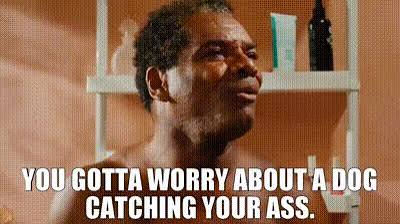
The movie Friday put the same idea in different words back in 1995. Craig’s father catches stray dogs for a living and wants Craig, fresh off losing his job, to apply. Craig tells him he ain’t trying to be no dog catcher. His father fires back:
“If you ain’t got nothing on the table, you ain’t gotta worry about catching a dog. You gotta worry about a dog catching your ass.”
“Everything is raw material. Everything is relevant. Everything is usable.”
Twyla Tharp
For years two brothers threw their best product in the trash. You’ve probably eaten it.
Nephi and Golden Grigg cut potatoes for frozen french fries in Oregon and each cut left slivers too small to sell. The slivers piled up and got hauled off as waste. In 1953 the brothers stopped throwing them out.
They chopped the slivers finer, mixed in flour and seasoning, pushed the mash through a row of holes and cut what came out into little cylinders. They called the result Tater Tots.
The scrap on the floor became the product.
Publishing a book was on my bucket list, the kind of thing you picture spending a year writing. Then I remembered the hundred principles I wrote five years earlier. I gathered them and hit publish. The book sat finished for five years while I pictured writing it.
I was building a new giveaway to grow my email list when I realized I already made one. A video that runs any business idea through eleven filters sits on YouTube with about fourteen thousand views and a page of its own. Put an email box in front of that framework and the giveaway is done. I nearly rebuilt from scratch what I only had to point at.
“Tell me to what you pay attention and I will tell you who you are.”
José Ortega y Gasset
Keyshia Cole sold a million copies of an album about love, then used one bridge for a bigger instruction: know your focus. Twenty years on, I still hear that bridge.
“You gotta know your focus in life.
And if love is your focus, then man, pay attention.”
Keyshia Cole, “Love, I Thought You Had My Back”
In poker you pick your table by the stakes. At one table the chips are pennies. At the next one over, a single hand can cost a month’s rent.
Same game, same cards, wildly different price to play.
Life seats you at several tables at once: work, love, health, friendship, learning. Each one takes bets from you all day.
The chips at these tables are attention. Money goes up and down. Your attention stack only goes down.
So the stakes you play at should follow your focus. A relationship you care about is a high-stakes seat: your evenings, your plans and a piece of your pride ride on it. A career that already feels secure can run at small stakes for a season.
A table can even sit empty for a while.
Warren Buffett handed Alice Schroeder unprecedented access for his official biography, The Snowball. She came back with the whole man: the deals, the discipline and a family that got whatever attention the work left over. He reportedly hated how his private life read on the page and pulled away from her after the book shipped.
He knew his focus and paid for it at the family table.
Ed Thorp met Buffett over a game of bridge in 1968. Thorp invented card counting, beat the blackjack tables, then took the same math to the stock market and won there too. He flagged Bernie Madoff’s fund as a fraud in 1991, seventeen years before it collapsed.
David Senra reads founder biographies for a living. Ask him how many of the four hundred founders he’s studied built a balanced life and you get three names.
Three of four hundred.
Under one percent, in a sample picked for obsession. For the other 397 the balanced life stayed a myth.
He puts Thorp closest to mastering it: great businesses and a good father.
Thorp closed his own fund in 2002. The strategy’s returns were thinning and he wanted the time more than the money. Each morning he still writes down his weight.
He kept big stakes on work, family and health at once. He won at all three. And even his balance was chosen table by table: the fund closed the moment time beat money.
What reads as balance from the outside was a series of deliberate bets.
Health is the table you can’t leave. In poker the blinds circle the table and charge each seat in turn, whether you play the hand or fold it. Skip the gym for a year and the charge still lands.
Choose which table you play at the highest stakes, which tables run small or even sit empty for now.
♠️
Which table in your life deserves higher stakes right now?
I choose to pay both bills in the same currency: a habit, an action repeated each day. Raw, sporadic effort could cover them too, but sporadic effort runs on willpower and willpower is finite. A new habit costs just as much at first. As it settles, it takes less and less willpower to run.
Bigger goals send bigger bills. Becoming a chess grandmaster, the highest title the game awards, costs years of daily study, a coach and hundreds of tournament games. A bill that size gets paid in several habits at once:
the morning study
the weekly games
the monthly tournament
An hour of chess a week makes you a better player and leaves the title where it was. Somewhere above that hour sits a rate where the title becomes a matter of time.
I call that line the hurdle rate. The goal sets it. My habits pay it.
Above the hurdle rate, extra payments buy speed. A player studying six hours a day reaches the title years sooner. The extra speed has its own price: the heavier the daily payment, the higher the odds you burn out before the title arrives.
A runner who stacks miles on too fast brings race day closer and raises the risk that an injury comes first.
Anthony Trollope paid for forty-seven novels with one habit: two hundred and fifty words every fifteen minutes, each morning before his job at the Post Office.
Thirty-four minutes of marketing a day is how I pay my own growth bill.
Each goal has a price. You choose how to pay it: in habits or in sporadic effort.
“The two most powerful warriors are patience and time.”
Leo Tolstoy
You can wreck a good habit by trying to improve it. This morning I took that risk with my marketing, a part of the business that’s working. My hand was on the dial to go from twenty-one minutes a day to thirty-four. I stopped to check whether I’d earned the turn.
Each goal has a price and I pay for most of my goals with habits. Call that price the hurdle rate. Underpaying towards a goal works like a credit card that charges eighty dollars a month in interest while you pay fifty: you pay each month and the debt still grows.
A habit paying below the hurdle rate burns effort the same way. You show up each day and still lose ground.
Above the hurdle rate, your effort compounds. My marketing cleared it weeks ago. Twenty-one minutes a day was enough and the results kept improving.
I take cold showers mainly for a better mood. The hurdle rate on that goal is thirty-four seconds. I pushed the shower toward a minute, then two and started skipping it on the hard mornings.
By then my bottleneck, the limiting factor holding everything else back, sat somewhere else entirely. The shower was aimed at mood and mood was paid in full. Pushing it was easier than staring down the real constraint. And the push cost me twice:
The longer showers bought nothing. Only work on the bottleneck improves your condition.
Above the hurdle rate, the only threat to your habit’s survival is your own hand. Holding becomes the job and holding is harder than pushing.
You still put in the same effort each day. What makes it hard is wanting the results to come faster and feeling like you have capacity to spare, the same hurry that cost Rick Guerin his Berkshire shares.
So you get restless and reach for a bigger floor.
The man who runs the world’s largest sovereign wealth fund calls doing nothing the hardest part of the job.
Nicolai Tangen manages two trillion dollars for Norway and runs a check he calls the inertia analysis: take the portfolio from January 1st, work out what it would have returned untouched, then set that against what the year of decisions actually produced. His own verdict from running it: “you actually have detracted from your performance by the things you’ve done.”
Almost always the right call is to hold. But three things can move the hurdle rate itself.
Your environment can move your hurdle rate. A company measures each investment against its hurdle rate and that rate is set by the cost of borrowing money. When interest rates jumped in 2022, projects that cleared the old bar suddenly fell short. The work was the same. The ground under it moved and each project got re-graded. The day your own market gets harder, your rate climbs the same way.
A sharper competitor can move your hurdle rate. Tiger Woods won the 1997 Masters by twelve strokes, a margin the tournament never saw. The people who run Augusta answered by lengthening fourteen of its eighteen holes, twenty-one times over the years that followed. One golfer got so good the course itself had to get longer to stay a contest. When a rival gets that good in your field, the level you already reached stops being enough.
Your ambition can move your hurdle rate. Nicolas Cage made about a hundred and fifty million dollars acting. He spent it on fifteen homes, two European castles, a Bahamas island and a seventy-million-year-old dinosaur skull, then owed the government millions and took any role he could to dig out. Raise your own aim and the level you were proud of last year stops counting.
Kevin Hart spends in the other direction: after a project wraps, he buys a watch. He associates each watch with the work he put in.
Marketing is my current bottleneck. The limiting factor where a push actually improves my condition. Thirty-four minutes a day should pay materially different returns over time than twenty-one. So I’m raising the floor to thirty-four today.
Cage’s floor rose on appetite alone, past what the hundred and fifty million could fund. My floor comes up after proof. I’ve banked a deep surplus of days above twenty-one, the way a poker player builds a bankroll. And a player with money to burn still doesn’t move up stakes: they move up when their game can survive the swings at the bigger table. So before thirty-four becomes my floor, I have to hit the new bar: eighty-nine minutes in a single session.
Most days, the answer is that the thing is working and you should leave it alone.
The urge to act that put my hand on the dial this morning never turns off. Psychologists call it hedonic adaptation: each level you reach resets what enough feels like. We can’t switch it off. We can be aware of it.
Default to riding your winners. Move the bar only when the ground under it moves, the habit is aimed at your bottleneck and you’ve proven the capacity to clear the new floor.
⏳
What in your life is already growing that you won’t stop pushing?
I play rated chess. A win lifts my rating and drops my opponent’s. My wins are funded by other people’s losses. When I play tired games at 2am, strangers carry my points away.
In Game of Thrones, the Ironborn, a culture of sea raiders, pay the iron price for what they own: they take it from the people they defeat. Buying a thing with gold, the gold price, is shameful to them.
My chess rating is an iron-price goal. So is status. Naval Ravikant calls status games zero-sum: for one person to rank higher, another ranks lower. And the game runs with or without your consent. You are in a status game right now whether you entered or not.
As Trotsky could have said: you might not be interested in war status, but war status is interested in you.
Each morning I buy a good mood with thirty-four seconds of cold water. That’s the gold price: I pay it and take nothing from anyone. My daily essays charge gold too. I pay in hours and the price holds no matter who else is posting.
Warren Buffett talks about two scorecards: the inner scorecard grades you against your own standard, the outer scorecard hands the grading to the crowd. We all keep both. Outer-scorecard goals tend to charge iron: rank in a crowd has to be taken from someone. Inner-scorecard goals charge gold: you set the standard and the price.
But can’t you set an inner-scorecard goal for chess? You can: grade yourself on effort, hours studied, games played. That holds, if effort is what you’re after. Reality grades on outcomes.
Mercantile empires treated the world’s wealth like the Ironborn: fixed, hoardable, winnable only by taking someone else’s. Adam Smith buried that belief in 1776 by showing that a fair trade leaves both sides richer. My daily essays work this way. Writing them makes me better and reading them makes you better.
Lewis Carroll’s Red Queen tells Alice it takes all the running you can do to keep in the same place. A goal priced in iron runs on her rule: the price rises while you sleep, because the other players set it and they keep playing. A goal priced in gold holds until something inside you moves it: a bigger ambition, expecting more of yourself.
We all pay iron somewhere. Even Buffett and Naval, the guys behind the warnings, curate how they’re perceived. Know what a goal charges before you chase it. Then, at least, you’re in the game with your eyes open.
⚔️
Does your most important goal charge you in iron or gold?
The con was simple: promise myself 20 minutes of outbound sales.
Two hours later, I was still doing targeted outreach. The 20 minutes was bait.
Going from zero to one costs more than everything after it. The first push is the expensive one.
A stalled car is brutal to move for the first inch and light once it rolls.
A rocket burns most of its fuel in the first minutes clawing off the pad. Orbit is nearly free by comparison.
A chemical reaction sits inert until a spark clears the barrier, then it gives off heat on its own.
An object at rest fights you. An object in motion stays in motion.
Your days obey the same law. The hard part of a run is the front door. The hard part of an essay is the blank page. The hard part of any task is the first move.
Writers learned to use this. Hemingway stopped each day while the writing was still going well and he knew what came next. The next morning he sat down to an open thread instead of a blank page.
So shrink the first step until it’s cheap to take. A two-hour sales block? I’d have argued myself out of. 20 minutes, I couldn’t. The small number got me past the start. The start is where most work dies.
“The big money is not in the buying and selling, but in the waiting.”
Charlie Munger
My worst weeks start right after I improve something. For years I couldn’t see the pattern. Then I noticed each dip followed a habit I added or dropped.
Move a tree to better soil each season and it never grows. Its energy goes into new roots instead of new height. The tree is healthy. The soil is good. The moving is what costs it.
An investor who trades constantly pays a fee on each trade. Sell a winner within the year and the tax bill jumps too: short-term gains get taxed at a higher rate than gains you wait for.
And each sale ends whatever compounding that pick started. The picks can be fine. The constant trading drains the account anyway.
One swap and the mornings turn hard again. The new routine needs full attention, the way anything new does before it sinks in. I lose track of what to work on next.
I recently added one habit: at least thirteen minutes of morning sun before 10 a.m. One habit on paper.
But my caffeine cutoff is also 10 a.m., so the tea now gets drunk earlier or carried outside. The walk out and the walk back bend the hour around them. One added habit and the whole morning re-adapted.
For decades I thought the cost stayed inside the one habit I touched. But habits interact: two of mine already ban lattes from my day by accident. Change one habit and the whole system shifts around it, whether you can see the shifts or not.
“All that you touch You Change. All that you Change Changes you.”
Octavia Butler
Each swap sends the whole system back through the learning phase and the settling starts over. Let it settle and the system gets cheap to run again.
Some settling cost is worth paying: skipping experiments carries its own risk. Changing things constantly is the trap, because nothing sits still long enough to compound.
Risk of ruin is a loss you can’t come back from. You blow up, you lose it all, the game ends. Some people guard against it. Position sizing, insurance, savings, the seatbelt.
Risk of reset is quieter. Far fewer see it coming. Nothing blows up. The habits stay. You just reset them before they settle enough to pay off.
Ruin ends the game. Reset keeps you starting the same game from scratch.
Before each change, I check the reason for it. A change worth making aims to fix something that’s actually wrong. The rest come from the urge to tinker. Most of mine did.
So now I make my changes in the first five days of each month. I add a habit, drop one or rework a routine, then lock it all for the rest of the month. My daily experiments keep running, twenty-one a day, but they run inside the locked system instead of remaking it.
Guard against ruin. Then guard against reset, because a system that never settles never pays.